Nexus: A Brief History of Information Networks from the Stone Age to AI
Download Book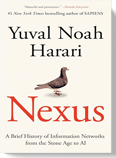
For the last 100,000 years, we Sapiens have accumulated enormous power. But despite all our discoveries, inventions and conquests, we now find ourselves in an existential crisis. The world is on the verge of ecological collapse. Misinformation abounds. And we are rushing headlong into the age of AI - a new information network that threatens to annihilate us. If we are so wise, why are we so self-destructive? NEXUS considers how the flow of information has shaped us, and our world. Taking us from the Stone Age through the Bible, early modern witch-hunts, Stalinism, Nazism and the resurgence of populism today, Yuval Noah Harari asks us to consider the complex relationship between information and truth, bureaucracy and mythology, wisdom and power. He explores how different societies and political systems have wielded information to achieve their goals, for good and ill. And he addresses the urgent choices we face as non-human intelligence threatens our very existence. Information is not the raw material of truth; neither is it a mere weapon. NEXUS explores the hopeful middle ground between these extremes, and of rediscovering our shared humanity.
21 Lessons for the 21st Century
Download Book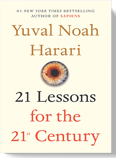
21 Lessons For the 21st Century provides a kind of instruction manual for the present day to help readers find their way around the 21st century, to understand it, and to focus on the really important questions of life. Once again, Harari presents this in the distinctive, informal, and entertaining style that already characterized his previous books. The topics Harari examines in this way include major challenges such as international terrorism, fake news, and migration, as well as turning to more personal, individual concerns, such as our time for leisure or how much pressure and stress we can take. 21 Lessons for the 21st Century answers the overarching question: What is happening in the world today, what is the deeper meaning of these events, and how can we individually steer our way through them? The questions include what the rise of Trump signifies, whether or not God is back, and whether nationalism can help solve problems like global warming. Few writers of non-fiction have captured the imagination of millions of people in quite the astonishing way Yuval Noah Harari has managed, and in such a short space of time. His unique ability to look at where we have come from and where we are going has gained him fans from every corner of the globe. There is an immediacy to this new book which makes it essential reading for anyone interested in the world today and how to navigate its turbulent waters.
Homo Deus: A Brief History of Tomorrow
Download Book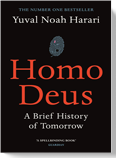
Humans today enjoy unprecedented levels of power and an increasingly god-like status. The great epidemics of the past – famine, plague and war – no longer control our lives. We are the only species in history that has single-handedly changed the entire planet, and we can no longer blame a higher being for our fate. But as our gods take a back seat, and Homo Sapiens becomes Homo Deus, what are we going to do with ourselves? How do we set the agenda for our own future without pushing our species - and the rest of the world - beyond its limits? In this vivid, challenging new book from the author of Sapiens, Yuval Noah Harari examines the implications of our newly upgraded condition, from our dogged pursuit of status and happiness to our constant quest to overcome death by pushing the boundaries of science. He explores how Homo Sapiens conquered the world, our creation of today’s human-centred environment, our current predicament and our possible future. And, above all, he asks the fundamental questions: Where do we go from here? And how will we protect this fragile world from our own destructive powers?
Sapiens: A Brief History of Humankind
Download Book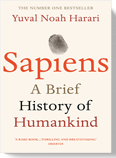
One hundred thousand years ago, at least six human species inhabited the earth. Today there is just one. Us. Homo sapiens. How did our species succeed in the battle for dominance? Why did our foraging ancestors come together to create cities and kingdoms? How did we come to believe in gods, nations, and human rights; to trust money, books, and laws; and to be enslaved by bureaucracy, timetables, and consumerism? And what will our world be like in the millennia to come? In Sapiens, Professor Yuval Noah Harari spans the whole of human history, from the very first humans to walk the earth to the radical—and sometimes devastating—breakthroughs of the Cognitive, Agricultural, and Scientific Revolutions. Drawing on insights from biology, anthropology, paleontology, and economics, and incorporating full-color illustrations throughout the text, he explores how the currents of history have shaped our human societies, the animals and plants around us, and even our personalities. Have we become happier as history has unfolded? Can we ever free our behavior from the legacy of our ancestors? And what, if anything, can we do to influence the course of the centuries to come?
[AUDIOBOOKS]
Note: Audio books should be downloaded using a computer over a Wifi connection as the files are well over 400mbs each. Once files are downloaded, use iTunes (if you're on an Android you'll have to figure it out yourself sorry ¯\_(シ)_/¯ ) to sync them into the Books app onto your iPhone or iPad. Using iTunes is the only way you can get audio books onto an iOS device at this moment in time. (Thanks Apple (◔_◔) )
| Sapiens: A Brief History of Humankind (Part 1) |
| Sapiens: A Brief History of Humankind (Part 2) |